
São Mateus area to be expropriated for railway construction.
The declaration of public utility for Petrocity's project to connect Brazil's Midwest to São Mateus was published in the Official Gazette of the Union.
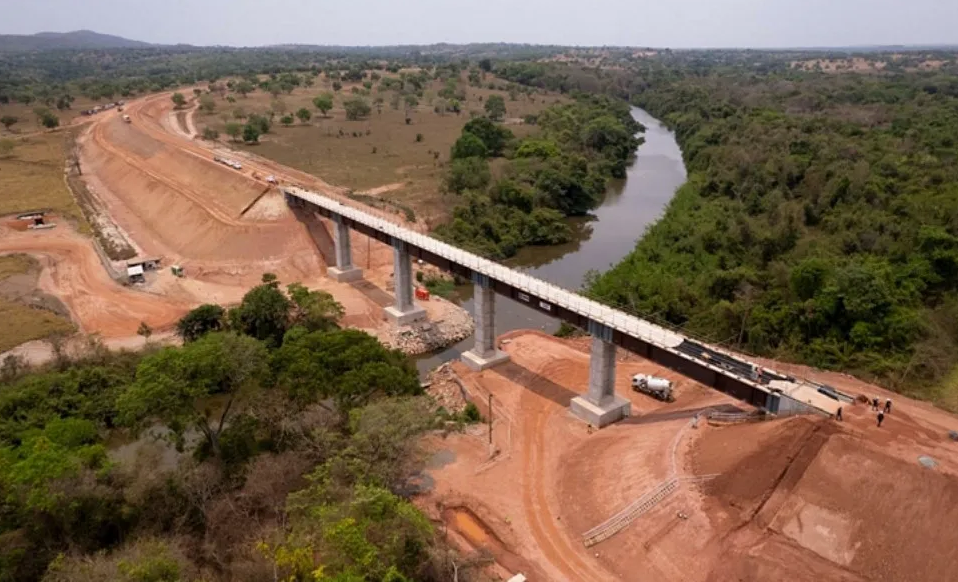
The expropriation of land for the construction of the last section of the Petrocity railway, designed to connect Espírito Santo to Goiás and other railway sections in the country, was authorized by the National Land Transportation Agency (ANTT).
The project's declaration of public utility—the procedure that allows expropriation—was published in the Official Gazette of the Union (DOU) this week. The authorized section, according to the document, is between Santana do Paraíso, in Minas Gerais, and São Mateus, in the north of the state.
The company was also authorized to invoke urgency in the expropriation process. However, for construction to begin, it will still need to obtain documents from government agencies, such as environmental licensing. Environmental studies, however, are already at an advanced stage, says Petrocity CEO José Roberto Barbosa.
“We are now beginning the administrative processes and subsequently transferring ownership of these lands to Petrocity Ferrovias S.A. Our schedule is being strictly adhered to,” he says.
According to Barbosa, the railway is expected to begin operating in 2029, along part of the 2,660-kilometer stretch between São Mateus and Mara Rosa, Goiás. Full operation of the railway, covering the entire route, is expected to be achieved in 2031, with the completion of construction.
The Petrocity project envisions a logistics corridor to connect agribusiness production in Brazil's Central-West region to ports under construction in the north of the state, consolidating the region as an important route for national commodities.
The railway network may also be used to transport production from industrial projects established in the region, integrated with the Northeast Development Superintendence (Sudene), a territory with significant tax incentives for corporations.
Petrocity's rail network will be connected to the North-South Railway (FNS), which runs across the country, beginning in Açailândia, Maranhão, and ending at the Port of Santos, São Paulo. The Central-West Integration Railway (FICO), which runs through the states of Goiás, Mato Grosso, and Rondônia, will also be connected.

The Petrocity railway, which will connect São Mateus (ES) to Mara Rosa (GO), is one of the railway projects underway in Espírito Santo focused on transporting agribusiness production from the Central-West region.
Construction is expected to begin in 2026 and be fully completed in 2031. The project is expected to create 10,000 jobs in the state, Minas Gerais, and Goiás for the projects.
The railway network will be made in a section: Barra de São Francisco to Brasília (EF-030); Brasília to Mara Rosa (EF-355), São Mateus to Barra de São Francisco with a branch to Ipatinga (EF-456).
The railway could also be integrated into the Bioceanic Railway project, which will connect the Brazilian coast to the Port of Chancay in Peru, serving as a route to Asia, says Petrocity CEO José Roberto Barbosa.
Total investment in the railway is estimated at R$23.4 billion. Permission agreements for use must also be negotiated with operators, says Barbosa.
Among them is the use of the weighing right by EFVM.


Comments